Yossi Vardi: Barcelona will be, along with Berlin and London, one of the most important technological cities in Europe
Yossi Vardi is delighted to be in Barcelona. During a talk at Barcelona Tech City's Pier01, this prominent entrepreneur in the Israeli hi-tech industry, one of the most prestigious investors in the…
Interviews
By Tech Barcelona · Apr 19, 2018

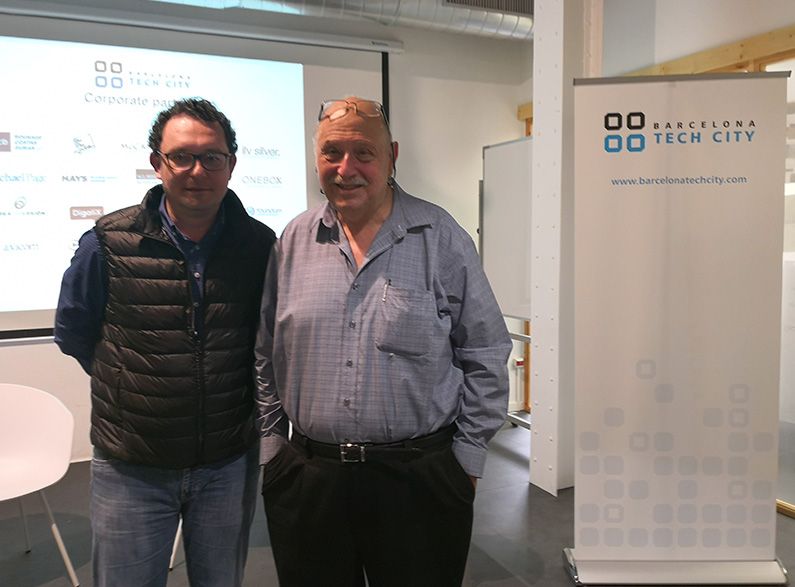
Yossi Vardi is delighted to be in Barcelona. During a talk at Barcelona Tech City's Pier01, this prominent entrepreneur in the Israeli hi-tech industry, one of the most prestigious investors in the startup world and President of 4YFN praised the climate of creativity, happiness and freedom that is present in Barcelona. He even ventured that its privileged location and the lifestyle will make it one of the three technological centres of reference in Europe, alongside Berlin and London.
Vardi spoke with Aleix Valls, co-founder of Liquid Co., with the tranquillity and humour that come with being a veteran in this world. He was, after all, the original investor in ICQ, the first instant messaging system on the Internet, and has helped drive forward more than 80 technology companies over the last 40 years.
Among the trends he noted for 2018, he highlighted everything related to optics and Big Data in health. He is not interested in cryptocurrency or virtual reality, the former because he does not understand them, and the latter because it reduces social connections. Vardi championed talent, partnerships between large companies and startups, and diversity.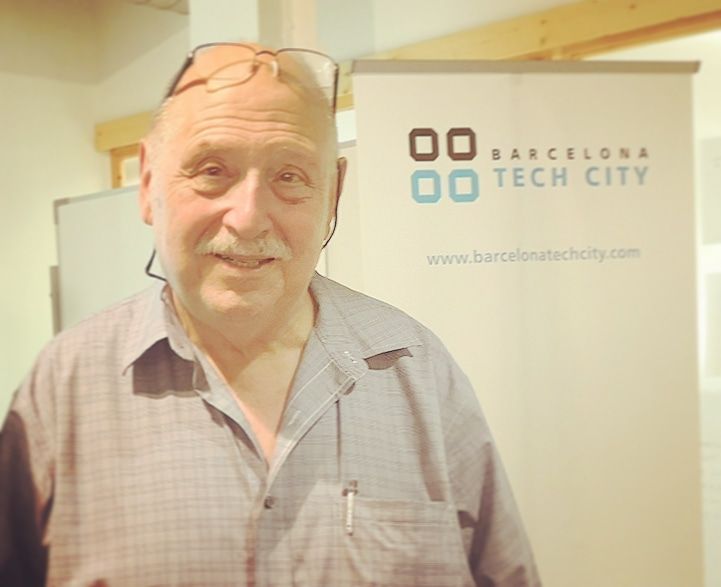 We can see this in more detail in these 10 considerations that emerged from his conversation with Aleix Valls during the session.
- The year of optics. The field of voice is going to see great progress, but what will really evolve in 2018 is optics. And not just mobile phone screens, but also in a wider sense, encompassing sectors such as facial recognition and other visual technologies. ‘Think about what your company does and how it can be applied to the world of optics and we'll talk about it three or four years from now’, Vardi challenged the audience. And he added: ‘All industries reach a point where technology is affordable. This is what happened with GPS, which is a cheap device for which you can create multiple applications’. It looks like the era of optics is coming.
- Better AR than VR. For Vardi, Virtual Reality (VR) reduces the chances of socialising and does not allow you to enjoy the experience of being with more people. And he does not like that. He prefers Augmented Reality (AR). ‘It gives you great added value and information about the photo you're viewing. I prefer it to VR, I like it very much’, he argued.
- The rise of women. ‘I said that 2018 is going to be the year of optics, but it is really going to be the year of women’, Vardi rectified at another point in the talk. The Israeli expert confirmed that he had never before seen so many women at the events he attends and revealed that it is undeniable that they are conquering more and more areas. He pointed out that the challenge to achieve equality lies not only in working for it in the workplace but in all spheres of life and society. He also stressed that women have a better ability to relate personally and a greater emotional intelligence, qualities that are essential for management positions.
- Large companies and startups, a win-win relationship. Vardi recalled that in the past large companies did not like startups but acknowledged that this relationship is changing. In fact, he stressed that strategic alliances between both types of organisations are fundamental and generate a win-win result. Large companies provide scalability, funding, marketing and internationalisation, while small ones innovate more quickly and are more creative.
- Everything is going to be Chinese. That is how forceful Vardi was, and he regretted having to say it, but for the Israeli investor, Europe is in a coma and the future belongs to the Chinese. He explained how Chinese companies are moving from the domestic to the international market, mimicking the process followed by American companies in the 1960s or 1970s and positioning themselves in the face of the emerging middle class. ‘When the middle class is saturated, Chinese companies will have the ambition to conquer the world. And in the meantime, everyone is sleeping’, he said.
- Health, a great opportunity. Another trend that Vardi highlighted is technology applied to health and science. ‘Big Data in health will create great opportunities in areas such as diagnosis, using the best therapies, etc.’, he asserted.
- The importance of talent. Vardi is looking for talented people but also good people behind the projects in which he invests. Talent is above product, for this great investor.
- The keys to investment. ‘People think it's risky to invest at the beginning, but in my experience it's not risky if you diversify’, says Vardi to Valls when he asks him what lessons he has learned from his experience in promoting more than 80 startups.
- New creative ecosystem. His long career in the world of technology has enabled him to witness the evolution of the sector’s work ecosystems. Vardi explained how the relationship with companies used to be more rigid, subject to a schedule and a place, and how leisure time was only extra-occupational. ‘Now the creative class is more fluid and concentrates where it wants to be, not where the government imposes it. With a computer and an Internet connection you can work from anywhere. This fosters diversity and it's wonderful’, he said.
- Blockchain yes, cryptocurrencies no. Surprisingly, cryptocurrencies do not attract Vardi. He was faithful to the advice of Warren Buffet who proclaimed that ‘if you don't understand something, don't invest’. He was more favourable to Blockchain as a way of reaching agreements and transactions.