Christian Rodríguez: Emotional management can help you attract talent in a competitive environment
Christian Rodríguez is CEO and co-founder of ByHours , the first online platform to allow users to book rooms in hotels around the world for less than a full night’s stay.
Interviews
By Tech Barcelona · Feb 20, 2018
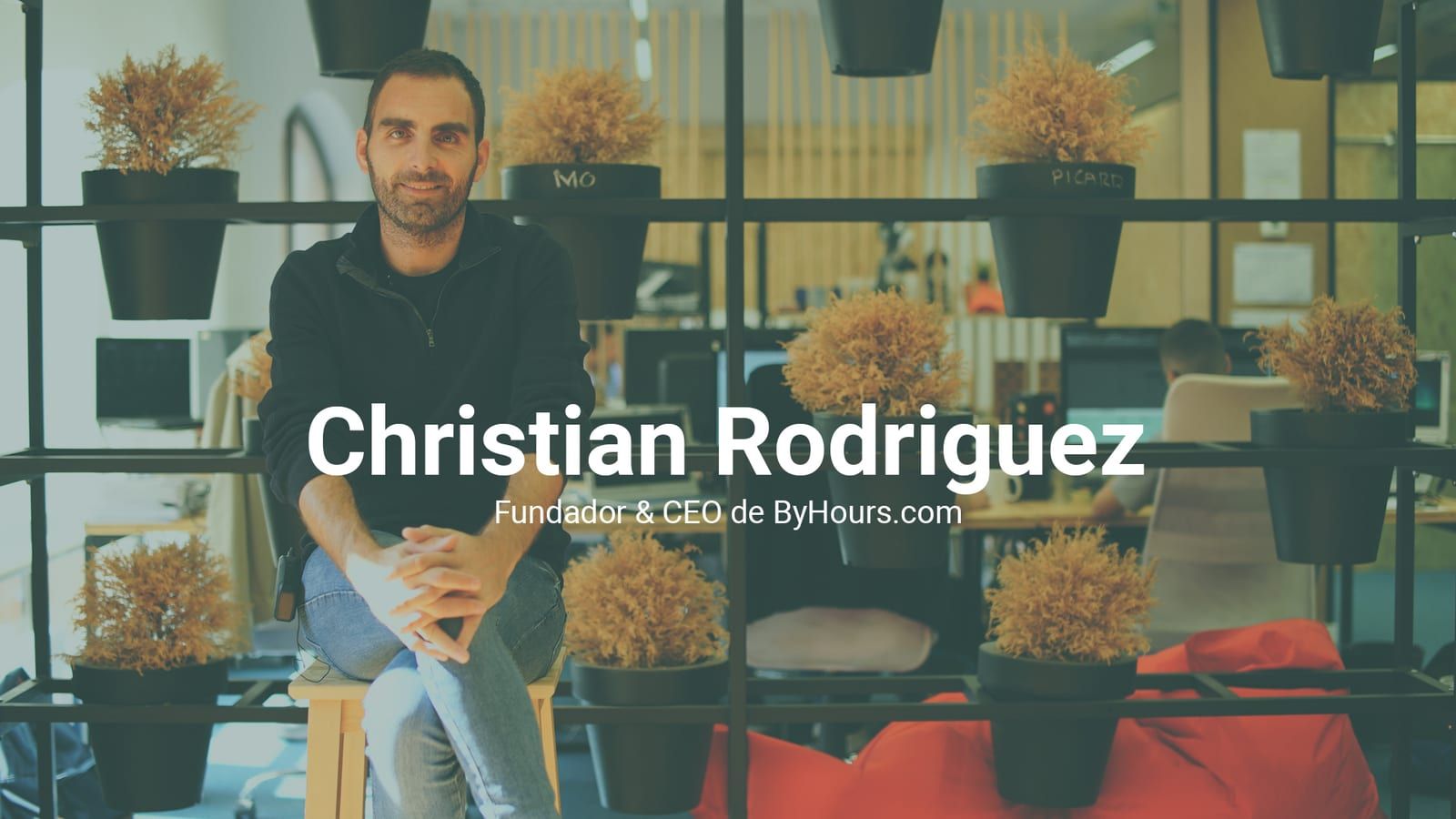
Christian Rodríguez is CEO and co-founder of ByHours, the first online platform to allow users to book rooms in hotels around the world for less than a full night’s stay. This company, which was founded five years ago, has come up with an alternative formula that complements what hotels currently offer. ByHours offers its clients a different way to book hotel rooms by segmenting stays into three-, six- and twelve-hour “packs”. It’s the first enterprise to apply the pay-per-use concept to travel services. The system allows hotels to offer travellers a flexible, extra service while improving their margins.
Rodríguez, who launched his first entrepreneurial venture at the age of 18, is focused on the challenge of adapting to the radical changes in today’s society and, above all, picking up on the big opportunities that are constantly emerging in a rapidly advancing world.
The co-founder of ByHours and Barcelona Tech City board member recently shared his vision of today’s entrepreneurial ecosystem and the following tips for beginning entrepreneurs.
Stayed focused on your priorities
“The fact that building an enterprise from the ground up isn’t easy is something that anyone who has ever embarked on that adventure has learned by personal experience. As you probably won’t have access to all of the resources you would like to have in order to maximise your outcomes, staying focused and knowing how to set priorities is essential,” Christian Rodríguez explains. He also advises entrepreneurs starting out “to be highly organised, meticulous and, above all, stay focused on the most important aspects of your project”.
Validate your idea at an early stage of the project
“You have to verify that users have a motive for using your product or service, that your value proposal offers something worthwhile to all the actors involved, that the market you are targeting is large enough to make your proposal viable and that there is a good chance you will be able to make a go of it”. For the CEO of ByHours, “the first investment you make must be devoted to validation”.
Like-minded co-founders
Once your idea has been validated, your next step is finding the right co-founders for your company. “You need to surround yourself with partners that think and feel like you and will get involved to the same degree, because this will strengthen your resolve and help prepare you at a personal level for other stages of the project such as choosing investors, defining scalable and sustainable growth and brand adjustments”, Rodríguez counsels. A team of co-founders must understand their project and be able to identify each of its stage of its development.
Offering value as a means of capturing talent
“Talent is always in demand, which means the competition can be tough. You have to offer something better than anyone else is offering if you want to be able to recruit talent. If your company doesn’t have much to offer, you can nevertheless craft a good emotional pitch”, Rodríguez explains. “It’s difficult, because if you can’t compete in terms of salary, you have to try to figure out what else the person you want to recruit needs in order to take the next step in his or her career”.
 Choosing investors
Your choice of investors is as important as your choice of team members. “Starting a business is seldom cheap or easy and therefore we tend to place a lot of emphasis on the financial aspect, investment, without giving to thought as to where the money is coming from,” Rodriguez observes. “We think more about the money than the profile of the person providing it, which is a race to the bottom because hasty decisions can have negative consequences”.
Success and expectations
“In many cases, it’s knowing how to meet the expectations of your partner, those of the people around you and your own that determines whether or not you’ve been successful”, Rodríguez notes, adding, “success is not a simply a question of money or sales but rather whether you have accomplished what you initially set out to do”.
Emotional management
The evolution of any enterprise implies change and renovating resources as business opportunities increase. “The moment arrives when your business grows to the extent that you’ve got to make decisions for the wellbeing of the company and everyone involved, and such decisions tend to carry a lot of emotional baggage”, Rodríguez warns. At the end of the day, the experience you’ve accumulated and the way that you have managed the good and bad decisions you’ve made along the way give you the maturity you need to take on future challenges. “What has helped me to manage the emotional aspects of managing my last few projects the most has been the disappointments I suffered with my first projects”, the CEO of ByHours recalls.
Adapt to changes and stay up to date
Rodríguez considers being prepared to deal with changes looming on the horizon and detect new opportunities to be an ongoing personal challenge. “We are at the point in the digital revolution at which anyone failing to identify opportunities looming on the horizon risks ending up on the wrong end of the curve”, he explains. He admits that staying on top of emerging opportunities“isn’t easy when you are totally focused on your own business. Technology and the business environment sometimes change so quickly that it’s hard to keep up with the pace of things”.
 Creating a start-up in a mature market
Although the entry costs of sophisticated and mature sectors are high due to the legislation they are subject to and the salaries professionals in these areas command, the money they generate continues to make them attractive to entrepreneurs. The maturity of a sector is not necessarily a disadvantage. As Christian Rodríguez notes, “The thing about mature markets is that if you manage to come up with a good enough value proposal that takes supply and demand into account and what you are trying to market offers something to everyone throughout your value chain from suppliers to end customers – another key consideration – your business can take off quickly”.
Internationalization implies rethinking every step
“Entrepreneurs tend to launch start-ups in the countries they grew up in or have lived in for some time. Regardless of the time you’ve spent to getting to know a national market, figuring out the resources it offers and making contacts there, not all of the knowledge and experience you’ve accumulated in that context is going to be of use to you in another situation”, Rodríguez observes. It’s therefore important to be able to distinguish between the know-how that has served you well in one place and how much of it is applicable in another market. One the basis of personal experience, he recommends approaching new projects “with a level of humility that allows to realise that starting from scratch in a new market supposes repeating the same step-by-step learning process you went through as a first-time entrepreneur. Things you’ve considered unconsequential or taken for granted in the market you’ve worked in may be keys to success in another”.
Choosing investors
Your choice of investors is as important as your choice of team members. “Starting a business is seldom cheap or easy and therefore we tend to place a lot of emphasis on the financial aspect, investment, without giving to thought as to where the money is coming from,” Rodriguez observes. “We think more about the money than the profile of the person providing it, which is a race to the bottom because hasty decisions can have negative consequences”.
Success and expectations
“In many cases, it’s knowing how to meet the expectations of your partner, those of the people around you and your own that determines whether or not you’ve been successful”, Rodríguez notes, adding, “success is not a simply a question of money or sales but rather whether you have accomplished what you initially set out to do”.
Emotional management
The evolution of any enterprise implies change and renovating resources as business opportunities increase. “The moment arrives when your business grows to the extent that you’ve got to make decisions for the wellbeing of the company and everyone involved, and such decisions tend to carry a lot of emotional baggage”, Rodríguez warns. At the end of the day, the experience you’ve accumulated and the way that you have managed the good and bad decisions you’ve made along the way give you the maturity you need to take on future challenges. “What has helped me to manage the emotional aspects of managing my last few projects the most has been the disappointments I suffered with my first projects”, the CEO of ByHours recalls.
Adapt to changes and stay up to date
Rodríguez considers being prepared to deal with changes looming on the horizon and detect new opportunities to be an ongoing personal challenge. “We are at the point in the digital revolution at which anyone failing to identify opportunities looming on the horizon risks ending up on the wrong end of the curve”, he explains. He admits that staying on top of emerging opportunities“isn’t easy when you are totally focused on your own business. Technology and the business environment sometimes change so quickly that it’s hard to keep up with the pace of things”.
Creating a start-up in a mature market
Although the entry costs of sophisticated and mature sectors are high due to the legislation they are subject to and the salaries professionals in these areas command, the money they generate continues to make them attractive to entrepreneurs. The maturity of a sector is not necessarily a disadvantage. As Christian Rodríguez notes, “The thing about mature markets is that if you manage to come up with a good enough value proposal that takes supply and demand into account and what you are trying to market offers something to everyone throughout your value chain from suppliers to end customers – another key consideration – your business can take off quickly”.
Internationalization implies rethinking every step
“Entrepreneurs tend to launch start-ups in the countries they grew up in or have lived in for some time. Regardless of the time you’ve spent to getting to know a national market, figuring out the resources it offers and making contacts there, not all of the knowledge and experience you’ve accumulated in that context is going to be of use to you in another situation”, Rodríguez observes. It’s therefore important to be able to distinguish between the know-how that has served you well in one place and how much of it is applicable in another market. One the basis of personal experience, he recommends approaching new projects “with a level of humility that allows to realise that starting from scratch in a new market supposes repeating the same step-by-step learning process you went through as a first-time entrepreneur. Things you’ve considered unconsequential or taken for granted in the market you’ve worked in may be keys to success in another”.